
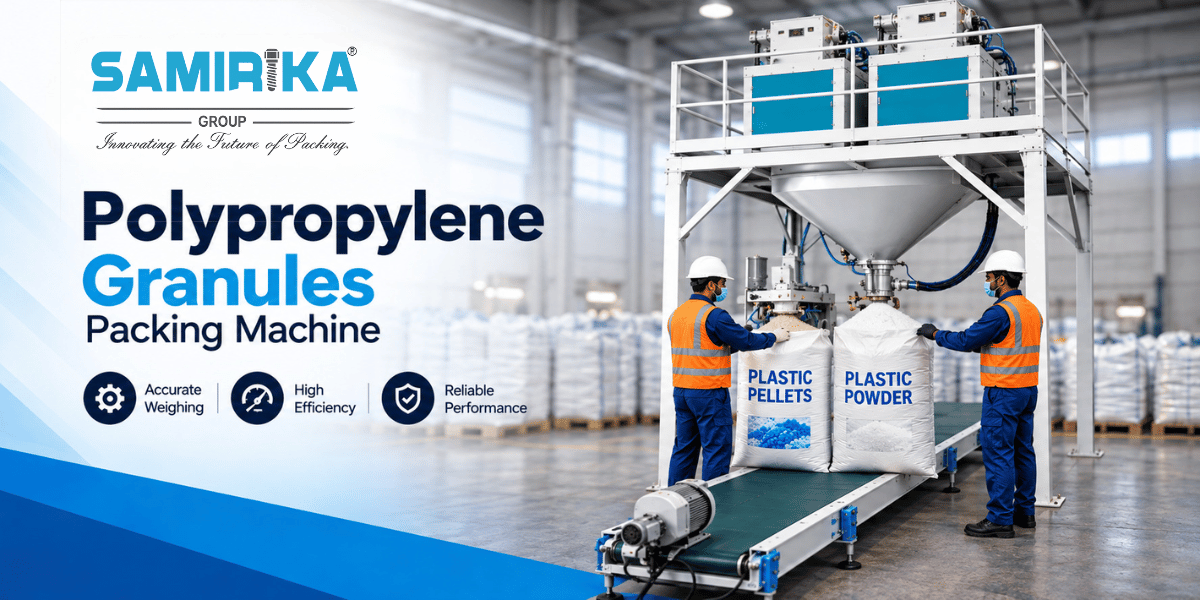
Polypropylene Granules Packing Machine
In the vast landscape of industrial manufacturing and material handling, the efficient and reliable packaging of granular materials is paramount. Polypropylene granules, a widely used polymer, demand specialized machinery to ensure their stable containment and safe transport. A Polypropylene Granules Packing Machine is at the heart of this process, designed to handle bulk quantities with precision and speed. This comprehensive guide delves into the intricacies of these machines, their applications, key features, and the crucial factors to consider when selecting the right solution for your business needs. Understanding these machines is key to optimizing your production line, minimizing waste, and ensuring product integrity.
Understanding Polypropylene Granules Packaging Technology
Polypropylene (PP) is a versatile thermoplastic polymer known for its strength, durability, and resistance to heat and chemicals, making it a popular choice for a myriad of applications. In its granular form, it is a raw material that needs to be packaged effectively for storage, transportation, and sale. A Polypropylene Granules Packing Machine automates this vital step, transforming loose granules into neatly contained, precisely weighed packages.
These machines are engineered to manage the unique properties of granular materials. Unlike powders, granules require systems that can handle a stable, consistent feed. This often involves sophisticated weighing and dosing mechanisms to ensure that each package contains the exact amount required, typically in standard sizes like 25 kg bags. The design must also account for the free-flowing nature of many PP granules, ensuring minimal spillage and maximum efficiency during the filling process.
Types of Granule Packaging Machines
Several types of machines are employed for packaging polypropylene granules, each suited to different production scales and specific requirements:
- Form-Fill-Seal (FFS) Machines: These high-capacity machines are ideal for free-flowing, non-dusty products like polymers. They create bags from a flat film roll, fill them with the product, and then seal them, all in a continuous, automated process. FFS machines can achieve impressive output rates, often exceeding 2000 bags per hour.
- Vertical Form Fill Seal (VFFS) Machines: Similar to FFS, VFFS machines create bags vertically. They are versatile and can produce various bag styles, including pillow bags, gusset bags, and flat bottom bags, making them suitable for a wide range of granular product packaging.
- Valve Bag Filling Machines: Commonly used for bulk materials like cement, chemicals, and granules, these machines fill bags through a valve. PP woven valve type bag packing machines are specifically designed for materials like polypropylene granules, filling bags typically ranging from 10 kg to 50 kg.
- Auger Fillers, Vibratory Weigh Fillers, and Volumetric Cup Fillers: These are specific filling mechanisms that can be integrated into larger packaging lines. Auger fillers are suitable for semi-free-flowing granules, while vibratory and volumetric fillers are excellent for free-flowing granular products, offering different balances of speed and accuracy.
Key Applications and Use Cases
The primary role of a Polypropylene Granules Packing Machine is to package PP granules efficiently and accurately. However, the technology extends to a broader range of industrial applications:
Polymer and Plastic Industries
Directly packaging raw polymer materials like polypropylene, polyethylene, and other plastic resins for manufacturers and distributors.
Agriculture
Packaging granular fertilizers, seeds, and animal feed components, ensuring precise dosages and secure containment.
Chemical Industry
Handling the packaging of various granular chemical products, including detergents, salts, and industrial chemicals, with safety and accuracy.
Food Processing
Packaging granular food ingredients such as sugar, salt, rice, pulses, and pet food kibble, often requiring adherence to strict hygiene standards.
Essential Features and Practical Benefits
Investing in a high-quality Polypropylene Granules Packing Machine brings numerous advantages to your operations. These benefits are driven by the sophisticated features integrated into modern packaging machinery:
- Precision Weighing and Dosing: Advanced load cells and intelligent control systems ensure highly accurate weights for each bag, minimizing product giveaway and meeting customer specifications. Filling accuracy can often reach as high as 0.2% of the target weight.
- Automation and Efficiency: PLC control systems and Human-Machine Interface (HMI) touch screens enable fully automated operation, from bag forming and filling to sealing and output. This significantly increases throughput and reduces labor costs.
- Product Integrity: Machines are designed to handle granules gently, preventing damage or degradation. Secure sealing methods ensure product protection against moisture, contaminants, and tampering during transit.
- Versatile Bag Handling: The ability to handle various bag types and sizes, including woven PP bags, provides flexibility for different product lines and market demands.
- Durability and Reliability: Construction often includes robust materials like stainless steel (e.g., 304 grade) for longevity and resistance to harsh environments. Reliable components ensure minimal downtime.
- Ease of Maintenance: Thoughtful design allows for straightforward cleaning and maintenance, ensuring the machine remains in optimal working condition with minimal operational interruption.
Selecting the Right Polypropylene Granules Packing Machine
Choosing the appropriate packaging machine is a critical decision that impacts operational efficiency, product quality, and overall profitability. Consider the following factors:
Buyer's Checklist: Key Considerations
Product Characteristics
Understand the flowability, particle size, density, and any potential dustiness of your polypropylene granules. This will determine the most suitable filling mechanism (e.g., vibratory, auger, volumetric).
Production Capacity Needs
Evaluate your current and projected output volumes. Machines vary significantly in their speed (bags per hour). Ensure the chosen machine can meet your demand without becoming a bottleneck.
Bag Type and Size Requirements
Determine the preferred bag material (e.g., woven PP, film), dimensions, and filling weights. Many machines are adaptable, but some are specialized.
Automation Level and Control System
Decide on the level of automation required. Modern PLC and HMI systems offer advanced control, data logging, and integration capabilities.
Material Construction and Durability
For many applications, especially those involving chemicals or outdoor exposure, stainless steel construction ensures longevity and resistance to corrosion.
Maintenance and Support
Consider the ease of cleaning, access to spare parts, and the availability of technical support and training from the manufacturer or supplier.
Questions to Ask Before Buying:
- What is the typical fill accuracy for my specific granule type?
- Can the machine handle variations in granule size or density?
- What is the operational speed, and is it adjustable?
- What type of bag materials and closures are compatible?
- What are the power and utility requirements?
- What maintenance is required, and how often?
- What kind of operator training is provided?
- What warranty and after-sales support are offered?
Reliable Solutions for Your Packaging Needs
For businesses seeking robust and efficient Polypropylene Granules Packing Machines, partnering with experienced providers is crucial. Understanding the precise needs of your granular product packaging—whether it's for the polymer industry, agriculture, chemicals, or food processing—allows for the selection of machinery that offers optimal performance, accuracy, and reliability. Look for solutions that incorporate advanced weighing technology, durable construction, and user-friendly control systems to enhance your production line's overall efficiency.
Frequently Asked Questions
What makes a Polypropylene Granules Packing Machine different from a powder packing machine?
Granule packing machines are designed to handle the free-flowing nature and specific particle size of granules, ensuring consistent filling without clogging or excessive dust. Powder packing machines often use augers or different dosing mechanisms to manage finer, potentially cohesive materials.
Can these machines handle recycled polypropylene granules?
Yes, provided the recycled granules are consistent in size and flow properties. Some adjustments or specific machine configurations might be necessary depending on the variability of recycled materials.
What is the typical lifespan of a granule packing machine?
With proper maintenance and quality construction (often using stainless steel), these machines can have a long operational lifespan, typically many years, depending on usage intensity and the specific components used.
How important is the sealing mechanism in a granule packing machine?
The sealing mechanism is critical for product integrity. It ensures that the granules are protected from moisture, contaminants, and leakage during storage and transportation. The type of seal (e.g., heat seal, impulse seal) depends on the bag material.
Conclusion
The Polypropylene Granules Packing Machine is an indispensable asset for industries that handle granular materials. By automating the complex task of weighing and filling, these machines ensure consistency, boost productivity, and maintain product quality. Careful consideration of your specific operational requirements—from product characteristics and desired capacity to bag types and control system preferences—will lead to the selection of a machine that provides lasting value and efficiency. Investing in the right packaging technology is an investment in the smooth, reliable, and profitable operation of your business.
Ready to optimize your packaging process? Explore how advanced Polypropylene Granules Packing Machines can enhance your operations. Contact us today to discuss your specific needs and discover tailored solutions.