
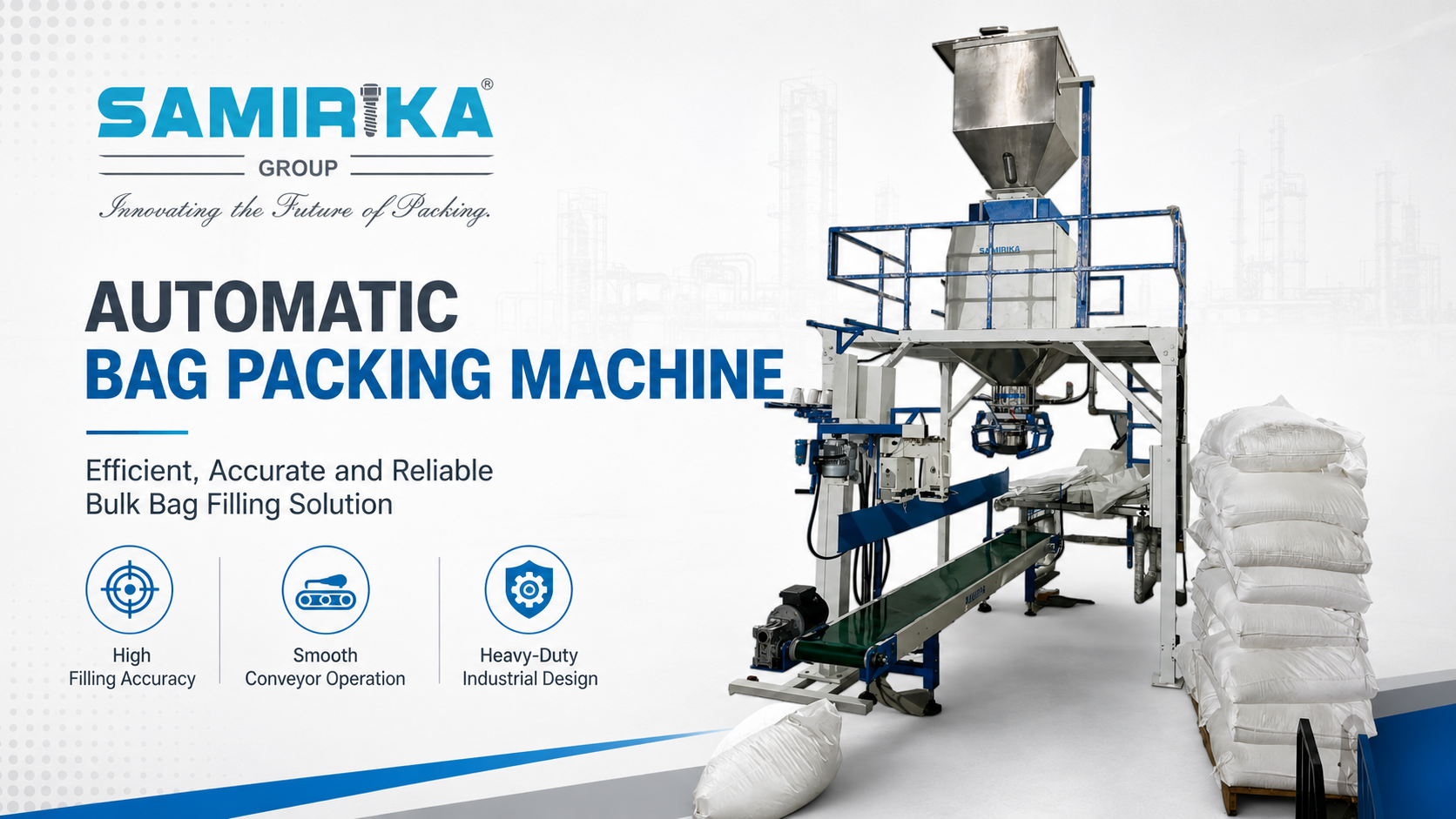
NET WEIGHT PACKING MACHINE
WHY THIS MATTERS IN AHMEDABAD, GUJARAT
Ahmedabad, a major industrial hub in Gujarat, hosts diverse manufacturing sectors. These include polymer, masterbatch, agriculture, food processing, chemicals, and construction materials. Such industries consistently require high-volume, accurate packaging solutions. The demand for reliable net weight packing machines stems from the need for production line efficiency, compliance with weight regulations, and competitive pressure to reduce operational costs. Local businesses seek robust machinery that delivers consistent performance under continuous use in this demanding environment.
WHAT IS A NET WEIGHT PACKING MACHINE — OVERVIEW
A net weight packing machine is an industrial system designed to accurately weigh and fill bags with a precise amount of granular or powdered material. Unlike gross weight systems, which weigh the product and bag together, net weight machines measure only the product before it enters the bag, ensuring superior accuracy. These machines typically use advanced load cell technology for high precision, handling materials from fine powders to coarse granules. They are vital for operations where exact product weight is crucial for quality control, inventory management, and customer satisfaction.
KEY FEATURES AND TECHNICAL SPECIFICATIONS
Selecting a net weight packing machine requires understanding its core capabilities and technical parameters. These machines are engineered for specific industrial demands, blending efficiency with precision.
- High Capacity Output: Capable of packing 250-300 bags per hour, achieving an output of 8 to 10 tons per hour for continuous production lines.
- Advanced Load Cell Technology: Integrated precision load cells ensure accurate net weight measurement, minimizing product giveaway and ensuring compliance.
- Versatile Bag Handling: Designed to accommodate various bag types, including pillow and gusseted bags, made from woven PP, paper, or HDPE materials.
- Adjustable Filling Weight: Supports a wide range of filling weights from 10 KG to 50 KG, offering flexibility for diverse product packaging requirements.
- Robust Construction: Contact parts are typically stainless steel for material compatibility and hygiene; non-contact parts use mild steel for structural integrity.
- User-Friendly Interface: Features an intuitive control panel with adjustable settings for different products and bag sizes, simplifying operation and reducing training time.
- Efficient Air and Power Consumption: Operates efficiently with standard industrial power supplies (Single Phase / Three Phase, 230V or 3x380-480V) and requires constant, dry, oil-free air pressure of 6 Bar.
- Compact and Sturdy Design: Engineered for industrial environments, ensuring long service life and stable performance with minimal maintenance.
INDUSTRIAL APPLICATIONS AND USE CASES
Net weight packing machines are indispensable across numerous industries requiring accurate and efficient packaging for bulk materials. Their versatility suits a broad spectrum of products.
- Polymer and Masterbatch: Packaging plastic granules, pellets, and masterbatch compounds for further manufacturing processes.
- Agriculture: Filling bags with seeds, grains, animal feed, and various agricultural products for distribution.
- Food Processing: Handling bulk food ingredients like sugar, flour, pulses, and spices, ensuring precise portions for commercial sale.
- Chemicals: Packaging fertilizers, industrial chemicals, and other powdered or granular chemical products safely and accurately.
- Minerals and Fuels: Used for bagging minerals, sand, aggregates, and certain solid fuels in construction and mining sectors.
- Construction Materials: Packaging cement, plaster, and other dry mix materials for building and infrastructure projects.
- Pet Food Industry: Ensuring consistent weight in bags of pet food, a critical factor for nutritional accuracy and consumer trust.
HOW TO CHOOSE THE RIGHT NET WEIGHT PACKING MACHINE
Selecting the appropriate net weight packing machine involves carefully evaluating several factors. This ensures the machine aligns with your operational needs and long-term goals.
- Assess Required Capacity: Determine your hourly or daily production targets to match the machine's output (e.g., bags per hour, tons per hour).
- Product Characteristics: Consider the material's flow properties, density, and particle size (granular, powdered) to ensure compatibility with the machine's feeding system.
- Bag Specifications: Verify the machine can handle your preferred bag types (pillow, gusseted) and materials (PP woven, paper, HDPE), along with the required filling weight range (e.g., 10-50 KG).
- Accuracy Requirements: Evaluate the precision of the load cell technology and its ability to consistently deliver the specified net weight, minimizing product giveaway.
- Durability and Material Construction: Look for robust construction, especially stainless steel contact parts, to ensure longevity and suitability for your product's characteristics.
- Ease of Operation and Maintenance: A user-friendly interface and simple mechanical design contribute to operational efficiency and reduced downtime.
- Supplier Experience and Support: Choose a supplier with a proven track record, offering comprehensive after-sales service, spare parts availability, and technical assistance.
- Customization Options: Inquire about the ability to customize features like hopper size, conveyor systems, or integration with existing production lines.
QUALITY STANDARDS AND COMPLIANCE
Adherence to quality standards and compliance is paramount when investing in industrial machinery like a net weight packing machine. These standards ensure operational safety, product quality, and long-term reliability. Buyers should verify that the machine manufacturer follows relevant industry benchmarks, such as ISO certifications for quality management systems. Specific standards for electrical safety (like IEC) and material handling equipment are also important. Ensuring the machine's components, especially those in contact with the product, meet food-grade or chemical-resistant specifications, depending on the application, is crucial. A reputable supplier will readily provide documentation of their manufacturing processes and material certifications.
WHY COMPANY EXPERIENCE AND CAPABILITY MATTERS
The performance and longevity of a net weight packing machine directly link to its manufacturer's experience and capability. Samirika Industries Pvt Ltd, a leader in industrial packaging solutions, understands the critical importance of precision and reliability in manufacturing. Their approach emphasizes robust engineering and integrates advanced weighing technology, such as high-precision load cells, to ensure accurate net weight filling.
Samirika Industries' technical team possesses the expertise to design machines capable of handling diverse granular and powdered products, ensuring consistent output of up to 10 tons per hour. This capability extends to offering customized solutions that seamlessly integrate into existing production lines, providing flexibility for various bag types and filling weights. The company prioritizes quality control throughout its manufacturing process, ensuring each machine is built for continuous industrial use, offering stable performance and a long service life. Their commitment to reliable delivery and comprehensive after-sales support further ensures clients receive dependable machinery and ongoing operational assistance.
INSTALLATION, MAINTENANCE AND CARE TIPS
Proper installation, regular maintenance, and diligent care are essential for maximizing your net weight packing machine's lifespan and efficiency. These practices help prevent unexpected downtime and ensure consistent performance.
- Professional Installation: Always engage qualified technicians for initial setup. Correct leveling, secure anchoring, and proper electrical and pneumatic connections are critical for optimal operation and safety.
- Regular Cleaning: Keep all contact parts and the surrounding area clean. For food or chemical applications, follow specific cleaning protocols to prevent contamination and material buildup.
- Lubrication Schedule: Adhere to the manufacturer's lubrication guidelines for moving parts. Using the correct type and amount of lubricant prevents wear and tear.
- Component Inspection: Periodically inspect load cells, sensors, conveyor belts, and pneumatic cylinders for signs of wear, damage, or misalignment. Replace worn components promptly.
- Calibration Checks: Regularly calibrate the weighing system using certified test weights to maintain accuracy. This is crucial for product consistency and compliance.
- Air Quality: Ensure the compressed air supply is consistently dry and oil-free, as specified by the machine's requirements (e.g., 6 Bar). Contaminated air can damage pneumatic components.
- Software Updates: Keep the control system software updated as recommended by the manufacturer to benefit from performance improvements and bug fixes.
- Operator Training: Ensure all operators are thoroughly trained on the machine's functions, safety procedures, and basic troubleshooting steps.
FREQUENTLY ASKED QUESTIONS
Net weight packing machines are highly versatile, designed for a wide array of free-flowing granular and powdered materials. This includes polymers, masterbatch, grains, seeds, animal feed, fertilizers, chemicals, and dry construction materials like cement. The machine's design, particularly its feeding mechanism and contact parts, is often tailored to suit the specific characteristics of the material being packed.
These machines are engineered for high precision, typically using advanced load cell technology to measure product weight before it enters the bag. This method minimizes discrepancies, ensuring each bag contains a consistent, accurate net weight. Accuracy can vary slightly based on calibration, material flow properties, and environmental factors, but they are generally very reliable for industrial applications.
The output capacity of a semi-automatic net weight packing machine varies by model and product characteristics. Many single-head machines achieve a packing speed of 250 to 300 bags per hour, translating to approximately 8 to 10 tons per hour. This capacity suits medium to large-scale industrial operations requiring efficient and consistent bulk packaging.
Yes, net weight packing machines offer significant flexibility and customization. They adjust to handle various bag types, such as pillow and gusseted bags, made from materials like woven PP, paper, or HDPE. The filling weight range is also adjustable, commonly from 10 KG to 50 KG, allowing businesses to adapt the machine to their specific product and packaging requirements.
Regular maintenance is crucial for long-term reliability and performance. This includes routine cleaning of contact parts, scheduled lubrication, periodic inspection of sensors and load cells, and regular calibration of the weighing system. Ensuring a clean, dry, and oil-free air supply is also vital for pneumatic components. Following the manufacturer's maintenance schedule helps prevent breakdowns.
A typical semi-automatic net weight packing machine operates on single-phase or three-phase power, with common voltages around 230V or 380-480V. Power consumption is generally about 4 kW. For pneumatic operations, a constant air pressure of 6 Bar is usually required, with air consumption around 90 Nm³/h. The air supply must be dry and oil-free to protect internal components. CONCLUSION Investing in a reliable net weight packing machine is a strategic decision for any industrial operation in Ahmedabad, Gujarat, handling granular or powdered materials. The ability to achieve precise, high-speed, and consistent packaging directly impacts efficiency, product quality, and cost control. When evaluating options, consider factors such as the machine's capacity, the accuracy of its weighing system, its robust construction, and the manufacturer's proven experience and commitment to support. Choosing a well-engineered solution ensures long-term operational stability, contributing significantly to maintaining product integrity and meeting market demands.
Get In Touch
Samirika Industries Pvt Ltd