
Jumbo Bag Filling Machine
Explore Samirika's jumbo bag filling machines for efficient 500kg-2000kg bulk material packaging in Ahmedabad. Ensure precision and reliability for industrial o
Why This Matters in Ahmedabad, Gujarat
Ahmedabad, situated in the heart of Gujarat, is a rapidly expanding industrial and manufacturing hub. The region's diverse economy includes thriving sectors such as chemicals, agriculture, minerals, food processing, and polymers. These industries frequently deal with bulk materials that require precise, high-capacity packaging for storage, transport, and export. The demand for reliable jumbo bag filling machine technology is driven by the need to streamline logistics, reduce labor costs, and meet stringent quality standards across these vital sectors.
What is a Jumbo Bag Filling Machine — Overview
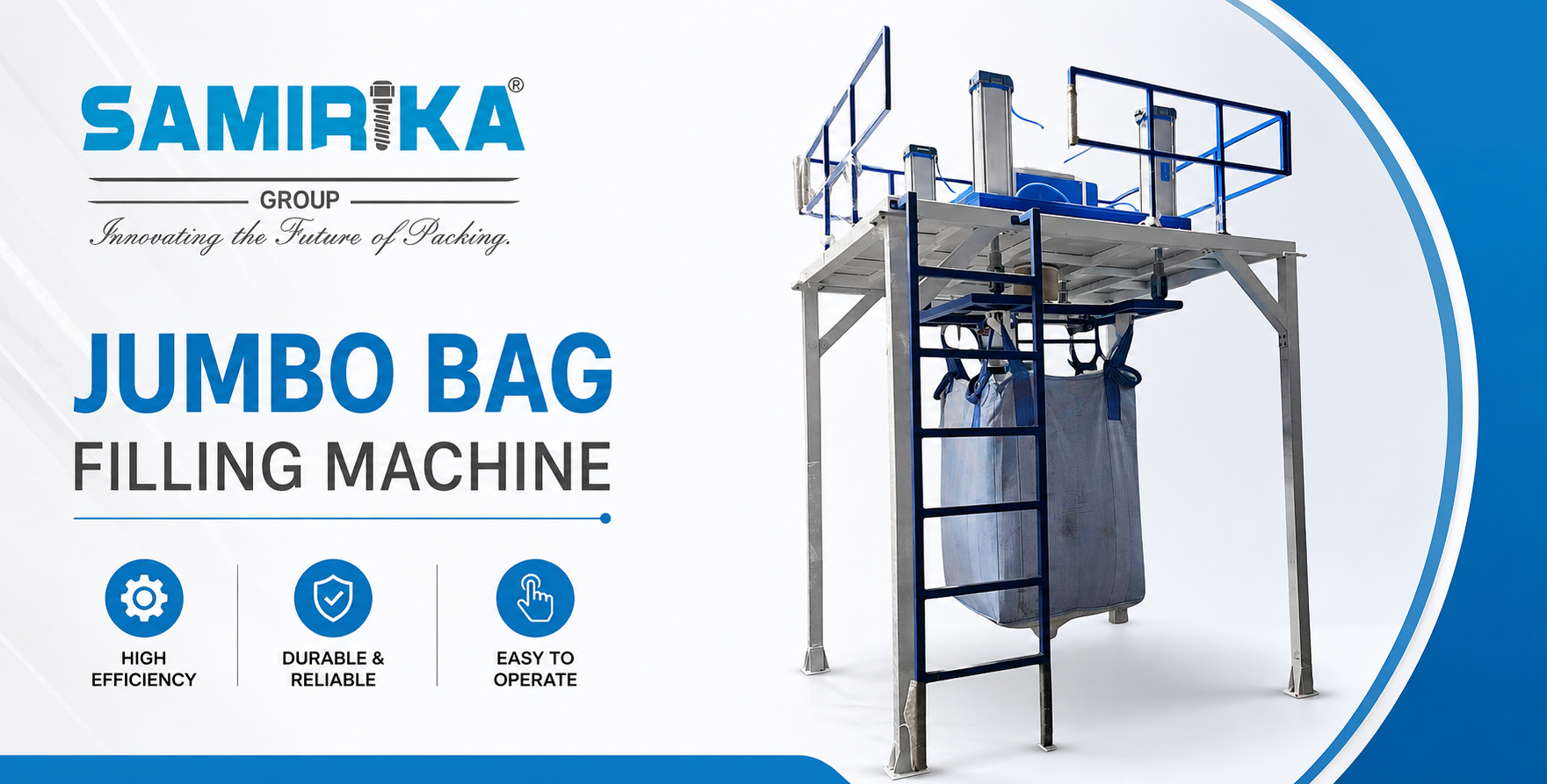
A jumbo bag filling machine, also known as a bulk bag filler or FIBC (Flexible Intermediate Bulk Container) filling machine, is specialized industrial equipment designed to accurately weigh and fill large bags ranging from 500kg to 2000kg. These semi-automatic systems typically involve placing a bag, initiating the filling process, and then sealing or preparing it for transport. The core function relies on advanced load cells and digital controls to ensure precise net weight measurement, accommodating various materials like powders, granules, pellets, and coarse aggregates with consistency.
Key Features and Technical Specifications
High-capacity performance, achieving 4-5 bags per hour for 500kg to 2000kg jumbo bags.
Integrated advanced load cells and digital weighing controls for precise net weight measurement.
Robust construction with stainless steel contact parts and industrial-grade components for durability.
User-friendly control panel designed for simple operation, quick calibration, and minimal operator training.
Versatile application suitable for a wide range of bulk products including powders, granules, and pellets.
Accommodates gusseted bags made from GCM PP or HDPE, with adjustable dimensions (900-2000mm length, 700-1200mm width).
Operates on single or three-phase power (230V / 3x380-480V) with a frequency of 50 Hz.
Requires a constant, dry, and oil-free air pressure of 6 Bar, with approximately 90 Nm³/h air consumption.
Industrial Applications and Use Cases
Jumbo bag filling machines are indispensable across numerous heavy industries due to their capacity and precision. Their ability to handle diverse material types makes them highly adaptable for various bulk packaging needs.
- Chemical Industry: Packaging of fertilizers, polymers, industrial salts, and various chemical powders or granules for safe transport and storage.
- Agriculture Sector: Efficient filling of seeds, grains, animal feed, pesticides, and other agricultural products for distribution.
- Mineral Processing: Handling of ores, sand, aggregates, cement, gypsum, and other processed minerals in large quantities.
- Food Processing: Bulk packaging of sugar, flour, starches, and other dry food ingredients for industrial use or large-scale distribution.
- Polymer Industry: Filling plastic pellets, resins, and other raw materials used in manufacturing plastics and synthetic fibers.
- Construction Materials: Packaging of specialty aggregates, cement additives, and other building materials for construction projects.
How to Choose the Right Jumbo Bag Filling Machine
Selecting the appropriate jumbo bag filling machine involves evaluating several critical factors to ensure it aligns with your operational needs and material characteristics. A careful assessment prevents future bottlenecks and ensures long-term efficiency.
- Capacity and Throughput: Determine your required bags per hour and the typical weight range (e.g., 500kg, 1000kg, 2000kg) to match machine output with production demands.
- Material Characteristics: Consider the flow properties, abrasiveness, dustiness, and corrosiveness of your bulk material. This influences the choice of construction materials and feeding mechanisms.
- Weighing Accuracy: Evaluate the precision requirements for your product. Machines with advanced load cells and digital controls offer superior accuracy, minimizing product giveaway or underweight bags.
- Level of Automation: Decide between semi-automatic and fully automatic systems based on labor availability, budget, and desired production speed. Semi-automatic options offer a balance of efficiency and cost-effectiveness.
- Bag Type and Dimensions: Confirm the machine can accommodate your specific bag types (e.g., gusseted, spout top) and their dimensions (length, width) to ensure proper fit and filling.
- Certifications and Compliance: Verify that the machine meets relevant industry standards for safety, quality, and environmental regulations, especially for sensitive materials like food or chemicals.
- Supplier Support and Experience: Choose a supplier with a proven track record, offering comprehensive installation support, operator training, and readily available spare parts and maintenance services.
Quality Standards and Compliance
Adherence to quality standards and compliance is paramount in industrial packaging, ensuring both operational safety and product integrity. Buyers should prioritize machines that meet recognized industry benchmarks. This includes verifying that the manufacturing process follows quality management systems like ISO 9001, which indicates a commitment to consistent product quality. For machines handling food-grade materials, specific certifications for contact parts, such as food-grade stainless steel, are essential to prevent contamination. Before procurement, it is prudent to request documentation, inspect manufacturing facilities, and confirm that all electrical and mechanical components comply with local and international safety regulations.
Why Samirika Industries Pvt. Ltd. Experience and Capability Matters
Choosing a manufacturer with deep industry experience and robust technical capability is crucial for the long-term performance of your jumbo bag filling machine. Samirika Industries Pvt. Ltd., based in Ahmedabad, Gujarat, brings extensive expertise to the design and manufacturing of industrial packaging solutions. Their approach focuses on precision engineering, utilizing integrated advanced load cells and digital weighing controls to ensure exceptional accuracy for 500kg and 2000kg capacities. The company's commitment to heavy-duty construction, incorporating stainless steel contact parts and industrial-grade components, ensures durability and stable performance even under demanding operational conditions.
Samirika Industries Pvt. Ltd. emphasizes a user-friendly design, making their semi-automatic jumbo bag filling machines easy to operate and maintain, which minimizes downtime and optimizes labor efficiency. Their technical team possesses the capability to customize solutions, adapting machines to specific material characteristics and bag dimensions. This focus on tailored engineering, combined with reliable delivery and comprehensive after-sales support, provides businesses with a dependable partner for their bulk material handling needs. Their local presence in Ahmedabad also ensures responsive service and support for clients across Gujarat and beyond.
Installation, Maintenance and Care Tips
Proper installation and consistent maintenance are vital for maximizing the lifespan and efficiency of any jumbo bag filling machine. Following recommended procedures ensures optimal performance and minimizes unexpected downtime.
Installation Guidelines:
Ensure the installation area has a level, stable foundation capable of supporting the machine's weight and the filled bags.
Connect the machine to the specified power supply (single or three-phase) and ensure proper grounding.
Verify that the air supply meets the required pressure (6 Bar constant) and is dry and oil-free to protect pneumatic components.
Calibrate the load cells accurately during initial setup to establish precise weighing parameters for your specific materials.
Routine Maintenance:
Regularly clean all contact surfaces and the weighing platform to prevent material buildup that could affect accuracy.
Inspect wear parts such as seals, gaskets, and pneumatic cylinders for signs of damage or degradation and replace them as needed.
Lubricate moving parts according to the manufacturer's schedule to ensure smooth operation and reduce friction.
Periodically check and recalibrate the weighing system to maintain accuracy, especially after handling different materials or after extended use.
Care Tips
Train operators thoroughly on safe and correct machine operation, including emergency stop procedures.
Monitor air pressure and quality; contaminated air can damage pneumatic components.
Address any unusual noises, vibrations, or performance changes promptly to prevent minor issues from escalating.
- Keep a stock of essential spare parts readily available to facilitate quick repairs and minimize production interruptions.
Frequently Asked Questions
Jumbo bag filling machines are designed to handle a wide range of bulk materials. This includes various powders like cement, flour, and chemicals, as well as granular products such as plastic pellets, grains, and fertilizers. They can also efficiently package coarse materials like sand, aggregates, and minerals, making them versatile for diverse industrial applications.
A semi-automatic jumbo bag filling machine, like those offered by Samirika Industries Pvt. Ltd., typically achieves an output capacity of 4 to 5 bags per hour. This rate is suitable for operations requiring high-volume packaging of 500kg to 2000kg bags while maintaining a balance between efficiency and operator involvement for bag placement and removal.
Weighing accuracy is critically important in jumbo bag filling machines to prevent product loss, ensure consistent bag weights, and comply with regulatory standards. High-precision load cells and digital controls minimize discrepancies, which translates to reduced material giveaway and avoids potential penalties for underweight products, directly impacting profitability and customer satisfaction.
Regular maintenance for a jumbo bag filler involves routine cleaning of contact parts and the weighing platform, inspection and lubrication of moving components, and periodic calibration of the weighing system. It also includes checking pneumatic and electrical connections, replacing worn seals or gaskets, and ensuring the air supply remains clean and dry to prevent component damage.
Yes, many jumbo bag filling machines can be customized to accommodate specific bag sizes, materials, and operational requirements. Manufacturers like Samirika Industries Pvt. Ltd. offer tailored solutions, adjusting features such as bag dimensions, feeding mechanisms, and construction materials to optimize performance for unique product characteristics or specific industrial environments.
Jumbo bag filling machines generally require a robust power supply, often three-phase (e.g., 3 x 380-480 V) with a frequency of 50 Hz, and a power consumption of approximately 5 kW. Additionally, they typically need a constant, dry, and oil-free air pressure of around 6 Bar, with an air consumption of about 90 Nm³/h for pneumatic operations.
Conclusion
The efficient and accurate packaging of bulk materials is a cornerstone of productivity for many industries in Ahmedabad, Gujarat, and beyond. Investing in a reliable jumbo bag filling machine offers a strategic advantage, ensuring precision, reducing waste, and streamlining operational workflows. When considering such an investment, prioritizing factors like machine capacity, material compatibility, weighing accuracy, and the proven capability of the supplier is paramount. Partnering with an experienced manufacturer ensures access to robust technology and essential support, contributing significantly to long-term operational success and material handling excellence.
Get In Touch
Samirika Industries Pvt. Ltd.