

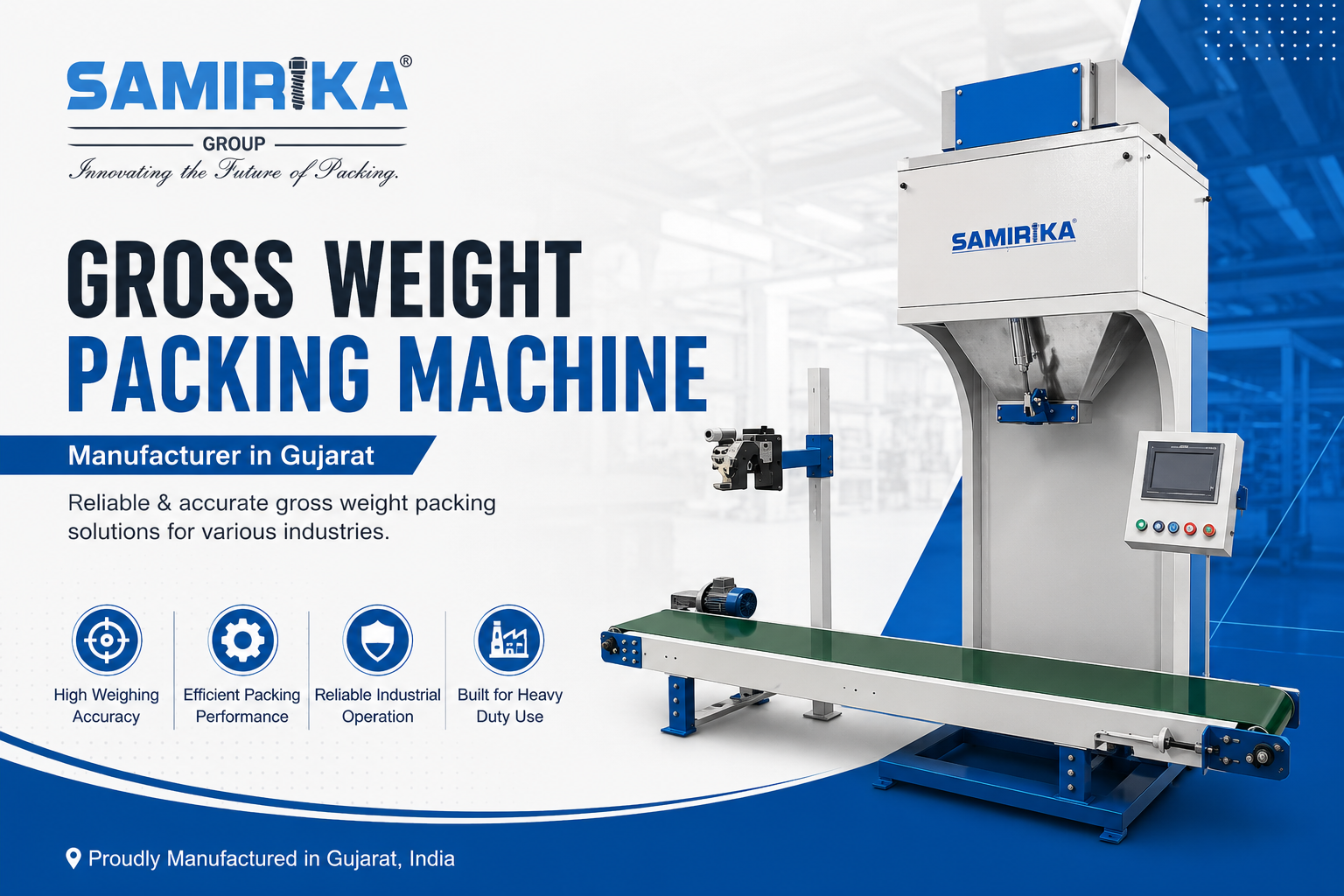
Gross Weight Packing Machine in gujarat
Optimize bulk product packaging in Gujarat with semi-automatic gross weight machines. Ensure accuracy, efficiency, and compliance for various industrial applica
Why This Matters in Gujarat
Gujarat stands as a significant industrial and agricultural hub, home to thriving sectors such as polymer manufacturing, food processing, chemicals, and agriculture. Each of these industries relies heavily on the efficient and accurate packaging of bulk materials, from raw ingredients to finished goods. The demand for precise weight control in packaging is driven by strict quality standards, export requirements, and the need to optimize operational costs. Investing in advanced packaging machinery directly supports the state's industrial growth by enhancing productivity and maintaining competitive advantage in both domestic and international markets.
What is a Gross Weight Packing Machine — Overview
A gross weight packing machine is an industrial system designed to fill bags or containers with a predetermined weight of bulk material. In a gross weighing system, the product is weighed directly within the bag or container as it is being filled, meaning the weight of the bag itself is included in the total measurement. Semi-automatic models, like the Gross Weight Packing Machine, combine automated weighing and filling with manual bag placement, offering a balance of efficiency and operational flexibility. These machines are engineered for high-precision packaging of free-flowing and semi-free-flowing bulk products, ensuring consistent weight control for various materials.
Key Features and Technical Specifications
Selecting the appropriate gross weight packing machine involves understanding its core capabilities and technical parameters. These machines are built to deliver consistent performance in demanding industrial environments.
- Accurate Weight Measurement: Features a highly precise weighing system, often utilizing load cells, to guarantee product packing within specified weight tolerances.
- User-Friendly Operation: Equipped with an intuitive control panel for easy adjustment of settings, enabling operators to optimize for different product types and packing weights.
- Durability and Reliability: Constructed from high-quality materials, ensuring robust performance and extended service life in high-volume production settings.
- Versatility: Capable of packing a wide range of bulk products, including powders, grains, pellets, and granular items, into various bag types.
- Enhanced Productivity: Semi-automatic design allows for packing speeds of up to 100-120 bags per hour, significantly increasing efficiency over manual processes.
- Material Compatibility: Contact parts are typically made from stainless steel to prevent contamination and ensure longevity, while non-contact parts use mild steel for structural integrity.
- Bag Specifications: Accommodates bag widths from 300–500 mm and lengths from 600–900 mm, with filling weights ranging from 5–50 kg.
- Operational Requirements: Operates with an air pressure of 6 bar (dry & oil-free) and a power supply of 3 × 380–480 VAC, consuming approximately 10 kW.
Industrial Applications and Use Cases
The versatility of a gross weight packing machine makes it indispensable across a broad spectrum of industries that handle bulk materials. Its ability to accurately measure and pack diverse products ensures compliance and efficiency.
- Polymer and Masterbatch: Packaging plastic pellets, granules, and masterbatch compounds for further processing in manufacturing.
- Food Processing: Filling bags with grains, pulses, sugar, flour, spices, and other dry food ingredients, maintaining hygiene and precise portioning.
- Chemicals: Handling various chemical powders, granules, and fertilizers, often requiring corrosion-resistant contact parts for safety and product integrity.
- Pharmaceuticals: Packaging bulk pharmaceutical ingredients and excipients, where accuracy and cleanliness are paramount for quality control.
- Agriculture: Bagging seeds, animal feed, pet food, and agricultural supplements for distribution and retail.
- Minerals and Fuels: Packaging crushed minerals, sand, aggregates, or solid fuels like coal pellets.
- Building Materials: Filling bags with cement, plaster, or other dry construction mixes for commercial use.
How to Choose the Right Gross Weight Packing Machine
Selecting a gross weight packing machine requires careful consideration of several factors to ensure it aligns with operational needs and long-term goals. A thorough evaluation helps prevent costly mismatches and maximizes return on investment.
- Production Capacity: Assess the required bags per hour to match the machine's output (e.g., 100-120 bags/hour) with your production targets.
- Product Characteristics: Consider the material's flow properties (powdery, granular, pelletized) and density, as this affects feeder type and accuracy.
- Bag Type and Size Compatibility: Verify the machine can handle your preferred bag materials (woven PP, paper, PE) and dimensions (width, length, filling weight range).
- Material of Construction: For corrosive or food-grade products, ensure contact parts are stainless steel to prevent contamination and ensure durability.
- Automation Level: Determine if a semi-automatic system meets your labor availability and desired efficiency, balancing automation with manual input.
- Supplier Experience and Support: Choose a supplier with a proven track record in manufacturing and supporting industrial packaging equipment.
- Certifications and Compliance: Confirm the machine meets relevant industry standards and safety regulations for your specific application.
- Customization Options: Evaluate if the machine can be adapted for unique product requirements or integration into existing production lines.
Quality Standards and Compliance
Adherence to quality standards is non-negotiable for packaging machinery, particularly for a gross weight packing machine. Buyers should verify that the equipment complies with relevant industry benchmarks to ensure operational safety, product integrity, and regulatory acceptance. Standards such as ISO 9001 for quality management systems indicate a manufacturer's commitment to consistent production processes. For specific industries like food or pharmaceuticals, compliance with hygiene standards and material contact regulations is crucial. Verifying certifications for components, electrical safety, and material grades (e.g., food-grade stainless steel) provides assurance regarding the machine's reliability and suitability for its intended application.
Why Company Experience and Capability Matters
The long-term performance and reliability of a gross weight packing machine are intrinsically linked to the experience and capability of its manufacturer. Samirika Industries Pvt. Ltd., with its established presence in Ahmedabad, Gujarat, understands the nuances of designing and producing robust industrial equipment. Their technical team possesses the expertise to engineer machines that deliver consistent accuracy and efficiency, even in demanding production environments. This capability extends from the initial design phase through precision manufacturing processes, ensuring each component meets stringent quality control checks. Furthermore, a manufacturer with deep experience can offer valuable insights into customization options, ensuring the machine integrates seamlessly into existing production lines and addresses specific operational challenges. Reliable after-sales support, including spare parts availability and technical assistance, is also a hallmark of a capable and trustworthy partner, safeguarding continuous operation for the buyer.
Installation, Maintenance and Care Tips
Proper installation and routine maintenance are crucial for maximizing the lifespan and performance of a gross weight packing machine. Following manufacturer guidelines ensures optimal operation and minimizes downtime.
- Professional Installation: Ensure the machine is installed on a stable, level surface with adequate space for operation and maintenance access. Correct electrical and pneumatic connections are vital for safety and functionality.
- Regular Cleaning: Keep all contact surfaces, especially the weighing pan and filling spout, clean to prevent material buildup and ensure accurate measurements. Use appropriate cleaning agents that do not corrode machine parts.
- Calibration Checks: Periodically calibrate the weighing system using certified test weights. This maintains accuracy and compliance with packaging standards.
- Component Inspection: Routinely inspect wear parts such as seals, bearings, and pneumatic cylinders for signs of wear or damage. Replace components as needed to prevent unexpected breakdowns.
- Lubrication: Follow the manufacturer's lubrication schedule for moving parts to reduce friction and extend component life.
- Operator Training: Ensure all operators are thoroughly trained on the machine's functions, safety protocols, and basic troubleshooting procedures.
Frequently Asked Questions
A gross weight packing machine is highly versatile, designed to handle a wide range of bulk products. This includes various powders, granular materials, pellets, and free-flowing items such as grains, sugar, spices, animal feed, plastic pellets, and chemical compounds. Its design ensures accurate and consistent filling for diverse material characteristics.
The production capacity of a semi-automatic gross weight packing machine can vary based on the product, bag size, and operator efficiency. However, models are commonly engineered to achieve capacities ranging from 100 to 120 bags per hour, providing a significant increase in efficiency compared to manual packaging methods.
Accuracy in a gross weight packing machine is primarily achieved through a precise weighing system, typically involving high-quality load cells. These sensors continuously monitor the weight of the product as it fills the bag, cutting off the flow once the target weight is reached. Regular calibration further ensures consistent precision.
Yes, gross weight packing machines are often designed with robust construction and sealed components to operate effectively in dusty industrial environments. Features like stainless steel contact parts and enclosed control panels help protect internal mechanisms from dust ingress, ensuring reliable performance and longevity.
Routine maintenance for a gross weight packing machine includes regular cleaning of contact parts, periodic calibration of the weighing system, and inspection of wear components like seals and bearings. Lubrication of moving parts and ensuring proper air pressure and electrical supply are also essential for sustained operation.
Many gross weight packing machines offer a degree of customization to accommodate specific operational needs. This can include adjustments for different bag widths and lengths, as well as compatibility with various bag materials such as woven PP, paper, or PE. Suppliers often work with buyers to tailor solutions.
Conclusion
Implementing a reliable gross weight packing machine is a strategic investment for any business dealing with bulk products, particularly within Gujarat's dynamic industrial landscape. These machines provide the essential precision and efficiency needed to meet stringent quality standards, optimize material usage, and enhance overall productivity. By carefully evaluating factors such as capacity, product compatibility, and the manufacturer's experience, businesses can select a solution that not only streamlines their packaging operations but also contributes significantly to their long-term success. Choosing a capable and trustworthy partner ensures access to robust equipment and dependable support, fostering consistent and accurate packaging for years to come.
Get In Touch
Samirika Industries Pvt. Ltd.