
Gross Weight Packing Machine in ahmdabad
Discover efficient gross weight packing machines in Ahmedabad for polymer, food, and chemical industries. Ensure accurate, high-volume bulk product packaging.
Why This Matters in Ahmedabad
Ahmedabad stands as a pivotal industrial hub in Gujarat, hosting a robust ecosystem of manufacturing sectors including polymer, masterbatch, food processing, chemicals, pharmaceuticals, and agriculture. These industries frequently deal with granular, powdered, or pelletized bulk products that require accurate and rapid packaging. The city's continuous industrial growth and expanding production capacities necessitate advanced packaging solutions that can keep pace with demand, minimize material waste, and ensure product quality before market distribution.
What is a Gross Weight Packing Machine — Overview
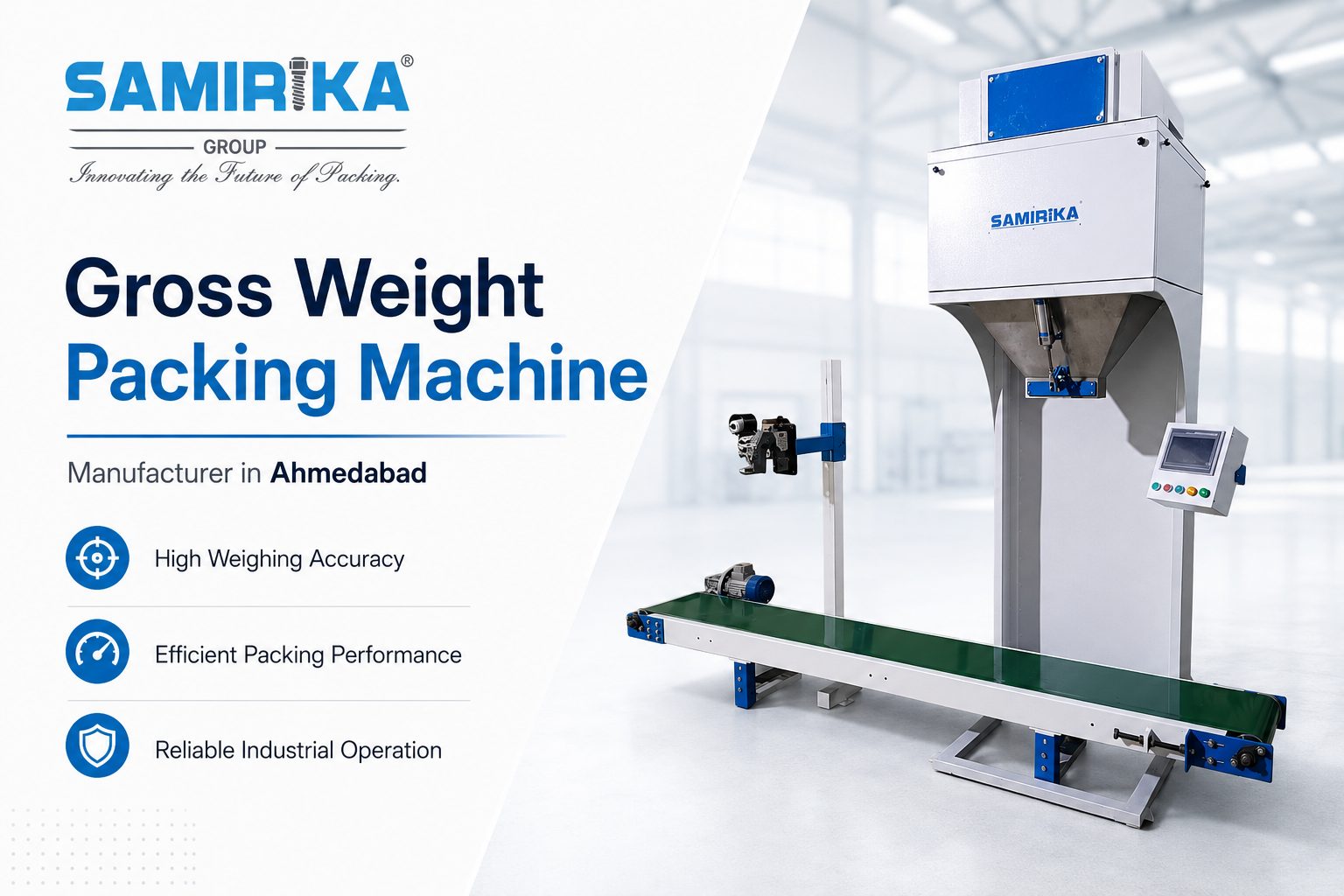
A gross weight packing machine is an industrial system designed to fill bags or containers with a specific weight of material, where the weight of the product and the bag are measured together. Unlike net weight systems that weigh the product before it enters the bag, gross weight systems place the bag directly onto a weighing platform and fill it until the target gross weight is reached. This semi-automatic approach is particularly effective for bulk products, offering a balance between manual handling and full automation, ensuring consistent fill weights at production rates typically ranging from 3 to 4 tons per hour.
Key Features and Technical Specifications
- Highly Accurate Weighing System: Guarantees precise product packing within specified weight ranges, minimizing material loss and ensuring compliance.
- Intuitive Control Panel: Facilitates user-friendly operation and allows for easy adjustment of settings for various product types and packing weights.
- Robust Construction: Built with high-quality materials, including stainless steel for contact parts and mild steel for non-contact parts, ensuring durability and long service life in demanding industrial environments.
- Versatile Product Handling: Capable of packing a wide array of bulk materials such as powders, grains, pellets, and granular items.
- Enhanced Productivity: Semi-automatic design allows for packing speeds of up to 100-120 bags per hour, significantly improving efficiency over manual methods.
- Adaptable Bag Specifications: Accommodates bag widths from 300–500 mm and lengths from 600–900 mm, suitable for pillow and gusseted bag types.
- Flexible Filling Weight Range: Designed to handle filling weights from 5 kg to 50 kg, catering to diverse packaging requirements.
- Optimized Air and Power Consumption: Operates efficiently with 6 bar dry and oil-free air pressure (~90 Nm³/h consumption) and 3 x 380–480 VAC power supply (~10 kW consumption).
Industrial Applications and Use Cases
Gross weight packing machines are indispensable across a spectrum of industries due to their precision and efficiency in handling bulk materials.
- Polymer and Masterbatch Production: Essential for accurately packaging plastic pellets, granules, and color masterbatches for further processing or distribution.
- Food Processing: Used for bagging grains, sugar, flour, spices, and other dry food ingredients, ensuring consistent portioning and quality control.
- Chemical and Fertilizer Industries: Critical for precise packaging of chemical compounds, fertilizers, and industrial salts, where accurate dosing is vital for safety and product efficacy.
- Pharmaceutical Raw Materials: Employed in the packaging of bulk pharmaceutical excipients and active pharmaceutical ingredients (APIs), adhering to strict weight and hygiene standards.
- Agriculture Sector: Ideal for packaging seeds, animal feed, pet food, and agricultural supplements, supporting efficient distribution and inventory management.
- Minerals and Fuels: Suitable for bagging various mineral products, aggregates, and solid fuels, ensuring uniform weight for commercial transactions.
How to Choose the Right Gross Weight Packing Machine
Selecting the appropriate gross weight packing machine involves a careful evaluation of several factors to ensure it aligns with specific operational needs and long-term business goals.
- Production Capacity: Assess the required bags per hour or tons per hour to match the machine's output capability with your production line demands.
- Product Characteristics: Consider the physical properties of your materials, such as density, flowability, and particle size, to ensure compatibility with the machine's feeding system.
- Bag Type and Size: Verify that the machine can handle your preferred bag materials (woven PP, paper, PE) and dimensions, as well as the desired filling weight range.
- Material of Construction: For corrosive or food-grade products, ensure contact parts are made from appropriate materials like stainless steel to prevent contamination and ensure longevity.
- Supplier Experience and Support: Choose a supplier with a proven track record in manufacturing and installing similar equipment, offering reliable after-sales service, spare parts, and technical assistance.
- Customization Options: Evaluate if the machine can be customized to integrate seamlessly into existing production lines or accommodate future changes in product specifications.
- Ease of Operation and Maintenance: Look for machines with intuitive controls and accessible components to minimize operator training time and simplify routine maintenance tasks.
Quality Standards and Compliance
Adherence to quality standards and compliance is paramount for any industrial machinery, especially in packaging where product integrity and safety are directly impacted. Buyers should verify that a gross weight packing machine meets relevant national and international standards such as ISO certifications for manufacturing quality management. For food and pharmaceutical applications, compliance with specific hygiene and material contact regulations is crucial. This includes ensuring that contact parts are made from food-grade stainless steel (e.g., SS304 or SS316) and that the machine design facilitates easy cleaning to prevent cross-contamination. A reputable supplier will provide documentation and certifications to confirm their equipment's compliance with these critical benchmarks.
Why Company Experience and Capability Matters
The long-term performance and reliability of a gross weight packing machine are intrinsically linked to the experience and capability of its manufacturer. Samirika Industries Pvt. Ltd. brings extensive engineering expertise to the design and production of these machines. Our focus on robust manufacturing processes ensures that each unit is built for durability and consistent performance in demanding industrial settings. We emphasize technical capability, employing skilled teams who understand the nuances of bulk material handling and precision weighing. Through stringent quality control measures at every stage, from material selection to final assembly, we ensure that our machines meet rigorous operational standards. This commitment extends to offering customization options, allowing our equipment to integrate seamlessly into diverse production environments. Our dedication to reliable delivery and comprehensive after-sales support ensures that clients receive not just a machine, but a complete, dependable packaging solution.
Installation, Maintenance and Care Tips
Proper installation, routine maintenance, and diligent care are essential for maximizing the lifespan and operational efficiency of a gross weight packing machine.
Installation
Ensure the machine is installed on a level, stable foundation capable of supporting its weight and operational vibrations.
Connect to a stable power supply within the specified voltage range (3 x 380–480 VAC) and ensure proper grounding.
Verify that the air supply is dry and oil-free at the recommended pressure (6 bar) to prevent damage to pneumatic components.
Calibrate the weighing system thoroughly after installation using certified test weights to ensure initial accuracy.
Maintenance
Regularly inspect all moving parts, such as conveyors, feeders, and bag clamps, for wear and tear.
Keep contact parts clean, especially when switching between different product types, to prevent contamination and ensure smooth operation.
Check pneumatic lines and fittings for leaks and ensure air filters are clean.
Lubricate bearings and other specified components according to the manufacturer's schedule.
Periodically re-calibrate the weighing system to maintain precision over time.
Care Tips
Train operators thoroughly on correct machine operation, safety protocols, and basic troubleshooting.
Store spare parts for critical components to minimize downtime during unexpected repairs.
Protect the machine from excessive dust, moisture, and extreme temperatures when not in use.
- Follow the manufacturer's guidelines for cleaning agents, especially for stainless steel surfaces, to avoid corrosion.
Frequently Asked Questions
The main distinction lies in the weighing process. A gross weight packing machine measures the combined weight of the product and the bag directly on the weighing platform as it fills. In contrast, a net weight system weighs the product in a separate hopper before discharging it into the bag, meaning the bag's tare weight is not included in the measured product weight. Gross weight systems are often simpler and more cost-effective for many bulk applications.
These machines are highly versatile and designed to handle a wide range of free-flowing and semi-free-flowing bulk materials. This includes granular products like seeds, grains, and pellets, as well as powdered materials such as flour, cement, and chemical powders. Their robust design and adjustable settings make them suitable for diverse product characteristics across various industries.
A semi-automatic machine significantly boosts efficiency by automating the precise weighing and filling process, which is often the most time-consuming and error-prone part of manual packaging. While an operator is still needed to place and remove bags, the machine handles the critical weighing and dispensing, leading to faster cycle times, consistent fill weights, and reduced labor requirements compared to fully manual methods.
Routine maintenance for a gross weight packing machine generally involves regular cleaning of product contact areas, inspection of mechanical components for wear, and lubrication of moving parts. It is also crucial to periodically check and calibrate the weighing sensors to ensure continued accuracy. Maintaining a clean and dry air supply for pneumatic components and verifying electrical connections are also important steps for reliable operation.
Yes, reputable manufacturers often offer customization options to tailor gross weight packing machines to specific industrial requirements. This can include adjustments to the feeding system for different product flow characteristics, modifications for various bag types and sizes, or integration with existing conveyor systems. Customization ensures the machine fits seamlessly into a client's unique production line and operational workflow.
Gross weight packing machines are designed to work with a variety of common industrial bag materials. These typically include woven polypropylene (PP) bags, which are known for their strength and durability, as well as paper bags and polyethylene (PE) bags. The choice of bag material often depends on the product being packed, its storage requirements, and transportation conditions.
Conclusion
Investing in a reliable gross weight packing machine is a strategic decision for any business in Ahmedabad dealing with bulk materials. The ability to achieve high-precision, efficient, and compliant packaging directly impacts operational costs, product quality, and market reputation. When considering a solution, prioritize factors such as the machine's capacity, material compatibility, adherence to quality standards, and the manufacturer's proven experience and support capabilities. A well-chosen machine not only streamlines your packaging process but also contributes significantly to overall industrial efficiency and sustained business growth.
Get In Touch
Samirika Industries Pvt. Ltd.