
Gross Weight Packing Machine
Gross Weight Packing Machine Solutions in Ahmedabad, Gujarat
Accurate and efficient packaging of bulk products presents a critical challenge for many industrial operations. Inconsistent weights can lead to product loss, compliance issues, and increased labor costs. A reliable gross weight packing machine addresses these concerns by providing precise, consistent filling for a wide range of materials. This technology is essential for businesses looking to streamline packaging processes and maintain product integrity, particularly in a dynamic industrial hub like Ahmedabad, Gujarat.
Why This Matters in Ahmedabad, Gujarat
Ahmedabad, Gujarat, stands as a significant industrial and manufacturing center. Its diverse sectors include polymer, food processing, chemicals, pharmaceuticals, and agriculture. These industries frequently handle bulk materials requiring precise weighing and packaging for distribution and compliance. The region's continuous industrial growth and its role as a key logistical hub drive the demand for efficient, high-precision packaging solutions. Businesses in Ahmedabad rely on robust machinery to meet production targets and maintain quality standards in a competitive market.
What is a Gross Weight Packing Machine — Overview
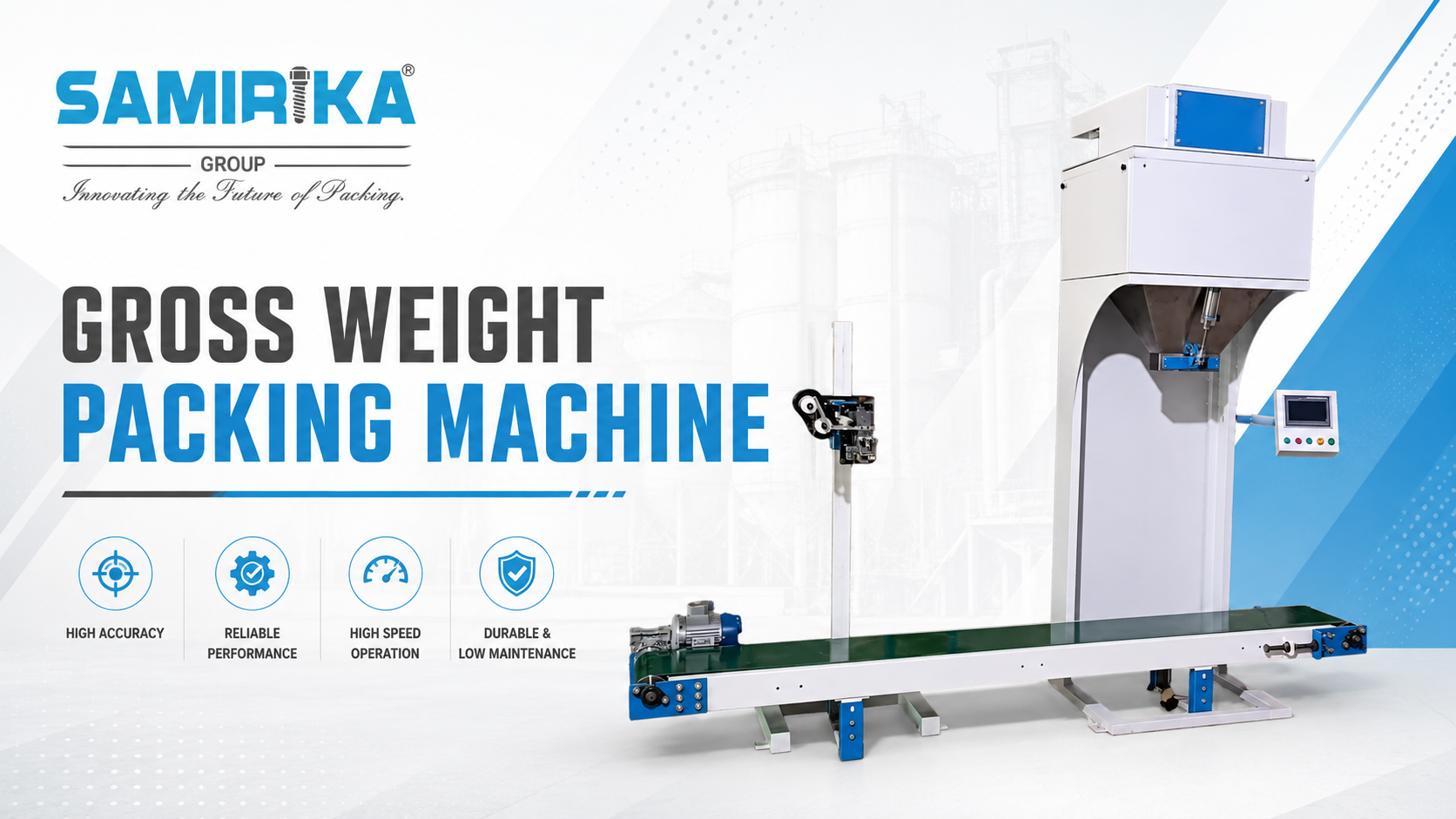
A Gross Weight Packing Machine is an industrial system designed to weigh a product directly within its packaging container, such as a bag or sack. Unlike net weight systems, which weigh the product before it enters the bag, a gross weight system measures the combined weight of the product and the bag as it fills. These semi-automatic machines typically feature a load cell, a filling spout, and a control system to ensure precise material dispensing. They are widely used for bulk products like powders, granules, pellets, and grains, where consistent fill weights are crucial for inventory management, regulatory compliance, and customer satisfaction.
Key Features and Technical Specifications
- Accurate Weight Measurement: Utilizes a highly precise weighing system to ensure products are packed within specified weight ranges, minimizing product loss and ensuring compliance.
- User-friendly Operation: Equipped with an intuitive control panel, allowing operators to easily adjust settings for various product types and packing weights.
- Durability & Reliability: Constructed from high-quality materials, ensuring robust performance and a long service life in demanding industrial environments.
- Versatility: Capable of packing a wide variety of bulk products, including powders, grains, pellets, and granular items, with flexibility for different bag sizes and weights.
- Enhanced Productivity: Semi-automatic design enables faster packing speeds compared to manual methods, boosting production efficiency while maintaining accuracy.
- Cost-effective Solution: Offers a balance of automation and manual input, providing an economical option for businesses seeking to optimize packaging without full automation.
- Material Construction: Contact parts are typically stainless steel for hygiene and corrosion resistance, while non-contact parts are mild steel for structural integrity.
- High Capacity: Designed to achieve packing rates of up to 100-120 bags per hour, depending on product characteristics and operator efficiency.
- Adjustable Filling Weight: Accommodates a broad range of filling weights, typically from 5 kg to 50 kg per bag.
Industrial Applications and Use Cases
- Polymer & Masterbatch Industries: Packaging of plastic granules, pellets, and masterbatch compounds for manufacturing processes.
- Food Processing Sector: Filling bags with grains, flours, sugar, spices, pulses, and other dry food ingredients.
- Chemical Manufacturing: Handling and packaging of fertilizers, industrial salts, powdered chemicals, and detergents.
- Pharmaceutical Industry: Used for bulk packaging of active pharmaceutical ingredients (APIs) and excipients, requiring strict hygiene and precision.
- Agriculture Sector: Bagging seeds, animal feed, pet food, soil amendments, and other agricultural products.
- Minerals & Fuels: Packaging of powdered minerals, aggregates, and solid fuels like coal dust or biomass pellets.
- Construction Materials: Filling bags with cement, plaster, sand, or other dry mix construction components.
How to Choose the Right Gross Weight Packing Machine
Selecting the appropriate gross weight packing machine involves evaluating several critical factors to ensure it aligns with your operational needs. A careful assessment helps in making an informed investment that enhances productivity and compliance.
- Required Capacity: Determine the desired bags per hour or tons per hour to match the machine's output with your production volume.
- Product Characteristics: Consider the flow properties, density, particle size, and abrasiveness of your material (e.g., free-flowing granules vs. fine, dusty powders).
- Bag Type and Material: Verify compatibility with your chosen packaging materials, such as woven PP, paper, or PE bags, and bag styles like pillow or gusseted.
- Filling Weight Range: Ensure the machine can accurately handle your specific minimum and maximum fill weights, typically from 5 kg to 50 kg.
- Material Compatibility: For food, pharmaceutical, or corrosive chemical applications, confirm that all contact parts are made from appropriate grades of stainless steel.
- Level of Automation: Assess whether a semi-automatic system meets your labor and efficiency goals, or if a higher degree of automation is necessary.
- Supplier Experience and Support: Look for a supplier with a proven track record in industrial packaging, offering reliable installation, training, and after-sales service.
- Customization Options: Inquire about the ability to customize features like filling spouts, bag clamps, or control systems to integrate seamlessly into your existing line.
Quality Standards and Compliance
Adherence to quality standards and compliance is paramount for any industrial packing operation. For gross weight packing machines, this involves ensuring the accuracy of the weighing system and the integrity of the materials used in construction. Key standards often include ISO 9001 for manufacturing quality management, indicating a commitment to consistent production processes.
For specific industries, additional certifications may be relevant; for instance, food-grade stainless steel (e.g., SS304 or SS316) for contact parts in food and pharmaceutical applications. Buyers should verify that the machine's weighing system is calibrated to national or international metrology standards to guarantee accurate product weights. Furthermore, compliance with local safety regulations and electrical standards is essential for safe operation.
Why Samirika Industries Pvt Ltd Experience and Capability Matters
Choosing a manufacturing partner with deep experience and robust capabilities is crucial for reliable industrial machinery. Samirika Industries Pvt Ltd, operating from Ahmedabad, Gujarat, brings extensive expertise in designing and manufacturing gross weight packing machines. Our approach focuses on engineering solutions that deliver efficient, high-precision packaging for a diverse range of bulk products. We leverage advanced technology and a skilled team to ensure consistent weight control and operational stability.
Our commitment to quality is evident in our manufacturing process. Machines are built from high-grade materials, including stainless steel for contact parts and mild steel for non-contact components, ensuring both hygiene and durability. This construction contributes to a long service life and stable performance even in demanding environments. We understand that every industrial application has unique requirements, which is why we offer fully customized solutions. From initial design to final implementation, Samirika Industries Pvt Ltd prioritizes technical capability, stringent quality control, and reliable after-sales support, ensuring our clients receive robust and adaptable packaging solutions that meet their specific production needs.
Installation, Maintenance and Care Tips
Proper installation and routine maintenance are vital for maximizing the lifespan and performance of a gross weight packing machine. Upon delivery, ensure the machine is installed on a level, stable surface and properly anchored to minimize vibrations. Connect it to the specified power supply (e.g., 3 x 380–480 VAC) and a clean, dry, oil-free air supply at the recommended pressure (e.g., 6 bar). Initial calibration of the weighing system is crucial to ensure accuracy from the start.
For daily care, operators should clean all contact surfaces to prevent material buildup, especially when handling dusty or sticky products. Regularly inspect the bag clamping mechanism and filling spout for wear or damage. Routine maintenance should include checking all pneumatic components, such as air cylinders and valves, for proper function and leaks, and lubricating moving parts according to manufacturer guidelines.
Periodically re-calibrate the load cells to maintain weighing precision. Any worn seals, belts, or sensors should be replaced promptly to avoid operational disruptions. Adhering to these practices ensures consistent performance, reduces downtime, and extends the machine's operational life.
Frequently Asked Questions
Gross Weight Packing Machines are highly versatile and designed to handle a wide array of bulk products. This includes various powders like flour, cement, or chemicals, as well as granular items such as plastic pellets, grains, seeds, and animal feed. Their design allows for efficient and precise filling of materials with different flow characteristics, making them suitable for diverse industrial applications.
A semi-automatic gross weight packing machine significantly boosts productivity by automating the precise weighing and filling process, which is often the most time-consuming part of packaging. While an operator is still needed to place and remove bags, the machine handles the consistent measurement and dispensing, leading to faster packing speeds, reduced manual error, and more uniform product output compared to fully manual methods.
The typical bag capacity for gross weight packing machines can vary based on the model and product density, but they are generally designed for industrial-sized bags. Common filling weights range from 5 kg to 50 kg per bag. These machines are engineered to handle a high volume of bags, often achieving rates of 100 to 120 bags per hour, depending on the material and operator efficiency.
The choice of material for contact parts is critical for several reasons, primarily hygiene, corrosion resistance, and product integrity. For industries like food, pharmaceuticals, or chemicals, stainless steel (e.g., SS304 or SS316) is essential to prevent contamination, resist corrosive substances, and ensure the machine does not react with the product. This maintains product quality and complies with industry regulations.
Regular maintenance for a gross weight packing machine involves several key tasks to ensure longevity and accuracy. This includes daily cleaning of contact surfaces, routine inspection of pneumatic components and moving parts, and periodic lubrication. Crucially, the weighing system's load cells require regular calibration to maintain precision. Replacing worn parts like seals or belts promptly also prevents unexpected downtime.
Yes, gross weight packing machines can often be fully customized to meet specific industrial requirements. This might involve adapting the filling spout for unique bag types, modifying the control system for integration with existing production lines, or selecting specialized materials for contact parts based on the product's properties. Customization ensures optimal performance and seamless integration into diverse operational setups. Conclusion Investing in a reliable gross weight packing machine is a strategic decision for any industrial operation dealing with bulk products. These machines offer a robust solution for achieving precise, consistent, and efficient packaging, directly addressing challenges related to product loss and compliance. When considering such an investment, factors like machine capacity, product compatibility, material construction, and the supplier's technical expertise are paramount. Partnering with an experienced manufacturer like Samirika Industries Pvt Ltd in Ahmedabad, Gujarat, ensures access to durable, high-performance equipment backed by comprehensive support, ultimately contributing to streamlined operations and sustained productivity.
Get In Touch
Samirika Industries Pvt Ltd