

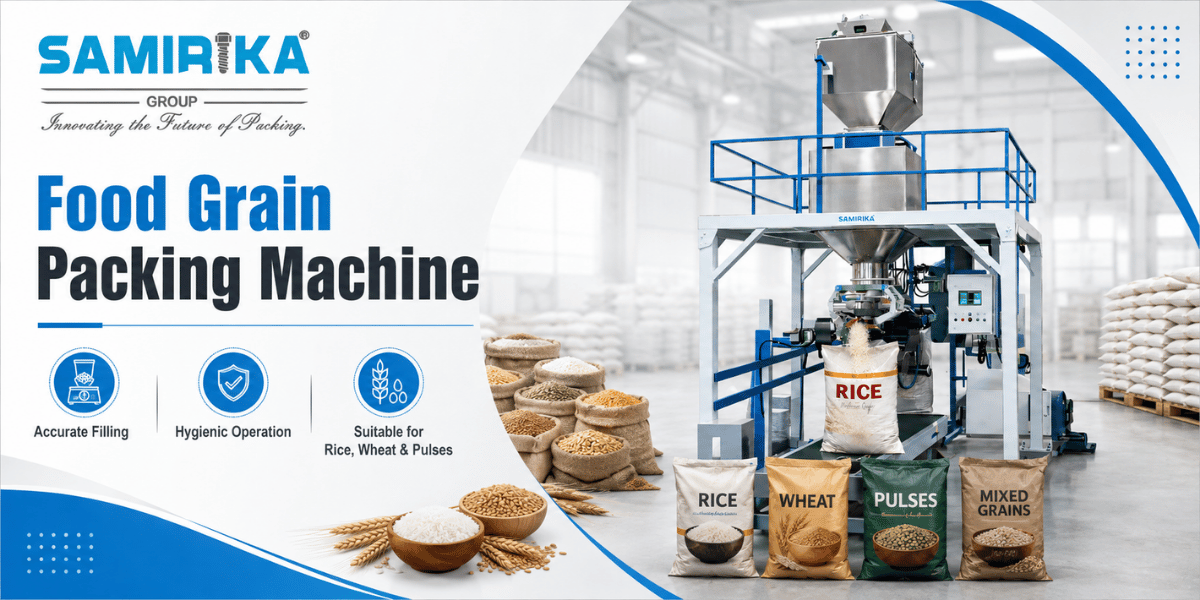
Food Grain Packing Machine
In the dynamic landscape of food processing and agriculture, efficient and reliable packaging is paramount. The Food Grain Packing Machine stands as a cornerstone technology, ensuring that vital commodities like rice, wheat, maize, and pulses are weighed, filled, bagged, and sealed with precision and speed. These sophisticated machines are indispensable for maintaining product integrity, reducing operational costs, and meeting the demands of a global market. Understanding their capabilities, benefits, and selection criteria is crucial for any business in the food and agriculture sectors looking to optimize their packaging operations.
Understanding Food Grain Packing Machines
A Food Grain Packing Machine is an automated or semi-automated system designed specifically for the precise weighing, filling, and sealing of various food grains and pulses. These machines are engineered to handle a wide array of products, including but not limited to rice, wheat, corn, barley, oats, beans, peas, and lentils. Their primary function is to streamline the packaging process, moving from manual, labor-intensive methods to efficient, high-throughput operations. Modern grain packing machines are equipped with advanced weighing mechanisms, robust filling systems, and reliable sealing technologies to ensure that each package meets stringent quality and weight standards. They are integral to operations ranging from large-scale production facilities to distribution centers and export units, playing a critical role in the global food supply chain.
Key Components and Functionality
At its core, a typical food grain packing machine comprises several key components that work in synergy:
- Weighing System: This is perhaps the most critical part, often employing technologies like load cells for accurate weight measurement. Machines can be categorized as Gross Weight or Net Weight fillers, each suited for different applications and product types.
- Filling Mechanism: This system dispenses the weighed product into the packaging material. Depending on the machine type and product, this can involve gravity feeding, belt feeding, or vibratory feeding.
- Bagging/Pouching Unit: This component handles the packaging material, which can range from pre-made bags and sacks to form-fill-seal (FFS) pouches. Materials commonly used include PP woven bags, BOPP, HDPE, and jute.
- Sealing Unit: Whether through heat sealing, sewing, or clipping, this unit ensures the package is securely closed, preserving freshness and preventing spillage.
- Control System: Modern machines are often equipped with Programmable Logic Controllers (PLCs) and Human-Machine Interface (HMI) touch screens, allowing for precise control over settings, operational monitoring, and data logging.
Types of Grain Packing Machines
Samirika Industries Pvt. Ltd offers a diverse range of packing solutions to meet varied industry needs. These include:
- Gross Weight Packing Machine (GWP): In this system, the product is weighed directly into the bag. It's generally simpler and faster for free-flowing products like grains, where minor variations in product density have less impact.
- Net Weight Packing Machine (NWP): Here, the product is weighed first into a weighing hopper and then discharged into the bag. This offers higher accuracy, making it suitable for products where precise weight is critical. Samirika offers models like NWP-01 and NWP-02.
- Jumbo Weight Packing Machine (JWP): Designed for bulk packaging, these machines handle larger bags or sacks, ideal for wholesale or industrial applications.
- Combo Weight Packing Machine (CWP): These advanced systems integrate multiple weighing and bagging units to achieve higher speeds and greater accuracy, combining the benefits of different technologies.
Beyond these core types, machines are also classified by their automation level. Semi-automatic food grain packing machines require some manual intervention, such as placing the bag, while fully automatic machines can handle the entire process from filling to sealing with minimal human input.
Applications and Industries Served
The versatility of food grain packing machines makes them invaluable across numerous applications within the food and agriculture sectors. Their primary role is to efficiently package grains and pulses for various market segments.
Where Are They Used?
- Rice Mills: Packaging milled rice into consumer-sized bags (e.g., 5 kg, 10 kg, 25 kg) or bulk sacks.
- Grain Distributors & Wholesalers: Packaging large volumes of grains for bulk sale to retailers or industrial users.
- Pulse Processors: Packing various pulses like lentils, beans, and peas into appropriate packaging formats.
- Flour Mills: While primarily for grains, similar machines are adapted for packing flour and other milled products.
- Animal Feed Manufacturers: Packaging feed grains and pellets for livestock and pet food industries.
- Export Units: Ensuring that grains are packed securely and according to international standards for global trade.
- Specialty Grain Producers: Packing niche grains or organic products where precise handling and presentation are key.
Samirika Industries Pvt. Ltd proudly serves these industries, providing reliable material handling and packaging solutions tailored to the unique demands of each sector. Their polymer packaging machines and jumbo packing machines further extend their capabilities to a wider range of product requirements.
Key Features to Look For
Benefits of Modern Grain Packing Technology
Investing in advanced food grain packing machinery offers significant advantages for businesses aiming for efficiency and profitability.
- Increased Productivity: Automation dramatically boosts the number of bags filled and sealed per hour, significantly outperforming manual processes.
- Reduced Labor Costs: Automated systems require fewer operators, leading to substantial savings in wages and associated expenses.
- Enhanced Accuracy and Consistency: Precision weighing systems minimize product giveaway and ensure that each package meets the specified weight, crucial for regulatory compliance and customer trust.
- Improved Product Quality: Consistent filling and secure sealing protect the grain from moisture, pests, and contamination, preserving its quality during storage and transit.
- Tamper-Proof Packaging: Secure seals provide evidence of product integrity, building consumer confidence.
- Operational Efficiency: Streamlined processes reduce bottlenecks in the production line, leading to smoother overall operations.
- Workplace Safety: Dust control features and automated handling reduce operator exposure to dust and repetitive strain injuries.
Buyer's Guide: Selecting the Right Food Grain Packing Machine
Choosing the appropriate food grain packing machine is a critical decision that impacts efficiency, cost, and product quality. Consider the following factors:
1. Product Characteristics:
- Flowability: How easily does your grain flow? Free-flowing grains might be suitable for Gross Weigh fillers, while stickier or more sensitive products may require Net Weigh systems.
- Product Type: Are you packing whole grains, pulses, rice, or perhaps milled products like flour? Some machines are better suited for specific textures and sizes.
- Desired Packaging Size: Determine the range of bag weights you need to handle (e.g., 5 kg, 10 kg, 25 kg, 50 kg). Ensure the machine's hopper and weighing system can accommodate this range.
2. Packaging Material:
- Bag Type: What kind of bags will you use? PP woven bags, BOPP laminated bags, HDPE sacks, or jute bags? Confirm compatibility.
- Bag Size: Ensure the machine can handle the dimensions of your chosen bags.
3. Speed and Capacity Requirements:
- Throughput Needs: Calculate how many bags per minute or hour you need to produce. This will dictate whether a semi-automatic or a high-speed fully automatic machine is necessary.
- Operating Hours: Consider how many hours per day the machine will run. Heavy-duty machines are designed for continuous operation.
4. Automation Level:
- Labor Availability and Cost: Assess your workforce. Fully automatic machines reduce labor dependency, while semi-automatic options can be more cost-effective for operations with available staff.
- Integration Needs: Will the packing machine need to integrate with upstream weighing systems or downstream conveyors and palletizers?
5. Accuracy and Control:
- Weight Tolerance: Define the acceptable margin of error for weight. High-precision weighing systems are crucial for valuable commodities or specific market regulations.
- Control System: Look for intuitive PLC/HMI interfaces for easy operation, recipe management, and troubleshooting.
6. Environmental and Safety Features:
- Dust Management: If dust is a concern (common with grains), opt for machines with dust-free filling spouts or optional dust extraction systems.
- Material Construction: Ensure the machine is built with durable, food-grade materials suitable for your environment.
Questions to Ask Before Buying:
- What is the typical packing speed for my specific product and bag size?
- What is the accuracy tolerance (e.g., +/- grams) of the weighing system for my product?
- What types of packaging materials and sizes can the machine handle?
- Does the machine have features for dust control or a dust extraction option?
- What kind of after-sales support, maintenance, and spare parts availability do you offer?
- Can the system be integrated with my existing production line?
Buyer Insight: When evaluating weighing accuracy, consider not just the machine's specification but also how product characteristics (like moisture content and particle size variation) might affect performance over time. Consistent product feeding is key to maintaining accuracy.
Samirika Industries: Your Partner in Packaging Solutions
Samirika Industries Pvt. Ltd understands the critical role that efficient packaging plays in the success of food and agriculture businesses. Specializing in material handling systems, they offer a comprehensive range of solutions designed to enhance productivity and ensure product integrity. Their portfolio includes advanced automatic weighing and bagging systems, robust polymer packaging machines, and heavy-duty jumbo packing machines.
Whether you require a high-accuracy Net Weight Packing Machine (NWP) for precise portioning, a versatile Gross Weight Packing Machine (GWP) for bulk grains, or a high-capacity Jumbo Weight Packing Machine (JWP) for larger sacks, Samirika Industries provides solutions tailored to your specific needs. Their commitment to quality and innovation ensures that their machines meet the rigorous demands of the food and agriculture industries, helping businesses like yours to optimize operations, reduce costs, and deliver quality products to the market.
Frequently Asked Questions (FAQ)
What is the primary function of a food grain packing machine?
The primary function is to accurately weigh, fill, bag, and seal various types of food grains and pulses, ensuring product integrity and efficient packaging for distribution and sale.
What is the difference between Gross Weight and Net Weight packing machines?
A Gross Weight machine weighs the product directly into the bag, which is simpler and faster for free-flowing products. A Net Weight machine weighs the product into a separate hopper first, offering higher accuracy for products where precise weight is critical.
Can these machines handle different types of grains?
Yes, food grain packing machines are designed to handle a wide variety of grains, pulses, seeds, and similar free-flowing or semi-free-flowing products, including rice, wheat, maize, lentils, and beans.
What are the benefits of using automatic food grain packing machines?
Benefits include increased production speed, reduced labor costs, consistent and accurate weighing, improved package integrity, and enhanced workplace safety through reduced manual handling and dust control features.
What types of packaging materials can be used with these machines?
These machines can typically handle a range of materials, including PP woven bags, BOPP laminated bags, HDPE sacks, and jute bags, depending on the specific machine model.
Optimize Your Packaging Process Today
Elevate your food grain packaging operations with state-of-the-art machinery from Samirika Industries Pvt. Ltd. Explore their range of automatic weighing and bagging systems, polymer packaging machines, and jumbo packing machines to find the perfect fit for your business. Discover how enhanced efficiency, accuracy, and reliability can transform your production line.
Explore Packing Solutions Now