
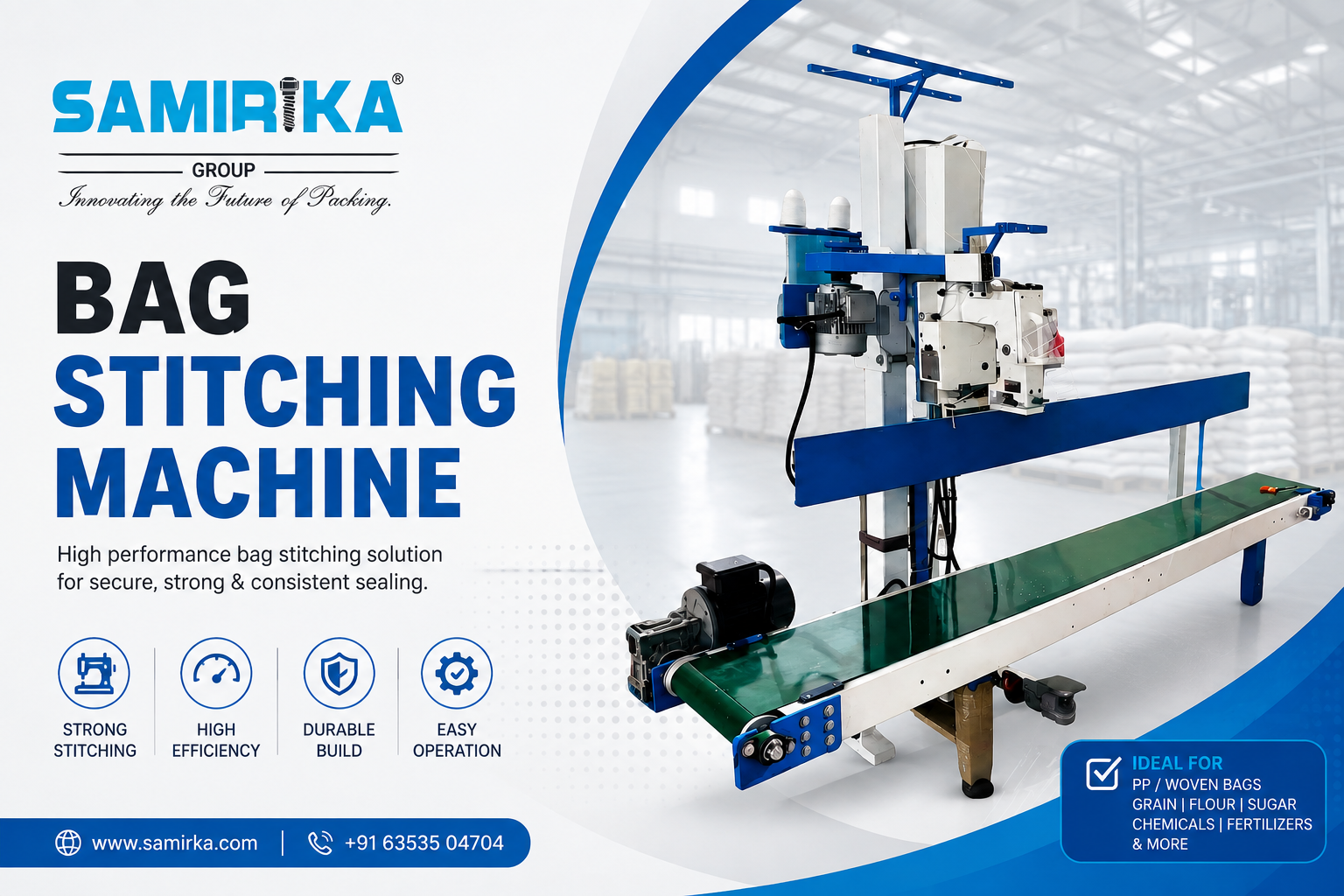
Bag Stitching Machine
Find reliable bag stitching machines in Ahmedabad. Enhance your packaging efficiency with durable, high-speed industrial sewing solutions from Samirika Industri
What is a Bag Stitching Machine? — Overview
A bag stitching machine, often referred to as an industrial sewing machine for packaging, is a specialized device designed to close filled bags by sewing them shut. These machines use heavy-duty needles and strong thread to create a durable, continuous stitch along the top opening of a bag. They are engineered to handle a wide variety of bag materials and sizes, operating at speeds that significantly outperform manual methods. Modern bag stitchers can be equipped with features like automatic thread cutters, lubricators, and even integrated conveyors for seamless integration into a packaging line.
When evaluating a bag stitching machine, several key features contribute to its performance and suitability for your specific needs:
- Robust Construction: Typically built with heavy-duty steel or cast iron for maximum durability and stability.
- High-Speed Operation: Capable of performing hundreds of stitches per minute to keep up with production demands.
- Adjustable Stitch Length: Allows for customization of stitch density based on bag material and weight.
- Automatic Thread Cutter: Streamlines the process by automatically cutting the thread after each bag is sealed.
- Integrated Lubrication System: Ensures smooth operation and extends the lifespan of moving parts.
- Ergonomic Design: Often features a balanced handle and lightweight construction for ease of use.
- Variable Speed Control: Some models offer adjustable speeds for handling different bag types or operator preferences.
- Dust and Water Resistance: Essential for operation in challenging industrial environments.
Industrial Applications and Use Cases
Bag stitching machines are indispensable across a multitude of industries, ensuring secure and efficient packaging for a vast array of products:
- Agriculture: Sealing bags of grains, fertilizers, animal feed, and seeds.
- Food Processing: Closing bags of flour, sugar, spices, pet food, and other dry food products.
- Chemical Industry: Packaging powdered chemicals, pigments, and industrial compounds.
- Construction Materials: Sealing bags of cement, sand, plaster, and aggregates.
- Textiles and Apparel: Closing bags containing fabric scraps, yarn, or finished garments.
- Mining and Minerals: Packaging coal, ores, salt, and other bulk mineral products.
- Recycling: Sealing bags of shredded materials or waste products.
- Logistics and Warehousing: Securing contents in bulk bags for transport and storage.
How to Choose the Right Bag Stitching Machine
Selecting the appropriate bag stitching machine involves considering several critical factors to ensure it meets your operational requirements:
- Bag Material Compatibility: Determine the types of bags you primarily use (paper, plastic, woven PP, multi-wall) and ensure the machine is designed for them.
- Production Volume: Assess your daily or hourly output needs to select a machine with sufficient speed and reliability.
- Bag Size Range: Consider the width and height of the bags you need to seal to ensure proper fit and closure.
- Portability vs. Fixed Installation: Decide if you need a handheld unit for flexibility or a stationary machine for a dedicated packaging line.
- Power Source: Verify compatibility with your available power supply (e.g., standard electrical outlets, battery-powered options).
- Durability and Build Quality: Look for machines constructed from high-quality materials designed for continuous industrial use.
- Safety Features: Consider features like automatic shut-off or guards to protect operators.
- After-Sales Support and Service: Inquire about warranty, spare parts availability, and technical assistance from the supplier.
Quality Standards and Compliance
When investing in industrial equipment like a bag stitching machine, adherence to quality standards and compliance is crucial. While specific certifications for bag stitchers can vary, buyers should look for manufacturers who demonstrate a commitment to quality manufacturing processes. This often includes adherence to ISO standards for quality management systems. For products used in food or pharmaceutical packaging, ensuring the materials used in the machine's construction are food-grade and compliant with relevant health and safety regulations is paramount. Verifying that the machine is built to withstand industrial environments and offers reliable performance over time is a key indicator of its quality.
Why Samirika Industries' Experience and Capability Matters
At Samirika Industries, our extensive experience in material handling and packaging automation sets us apart. We understand the critical role a reliable bag stitching machine plays in your production line. Our commitment to quality is reflected in the robust construction and precision engineering of our equipment, designed for durability and high performance in demanding industrial settings. We leverage our deep technical expertise to offer solutions that are not only efficient but also tailored to the specific needs of industries in Ahmedabad and beyond.
Our manufacturing process adheres to stringent quality control measures, ensuring that every machine leaving our facility meets our high standards. We pride ourselves on our ability to provide customized solutions and comprehensive after-sales support, including readily available spare parts and responsive technical assistance. This dedication to customer satisfaction and product excellence makes Samirika Industries a trusted partner for your packaging automation needs.
Installation, Maintenance, and Care Tips
Proper installation and regular maintenance are key to maximizing the lifespan and performance of your bag stitching machine.
Installation
Ensure the machine is placed on a stable, level surface. If it's a stationary unit, connect it to a suitable power source, ensuring all electrical connections are secure and properly grounded. For handheld units, ensure the battery is fully charged or the power cord is securely connected.
Routine Maintenance:
- Lubrication: Regularly oil moving parts as per the manufacturer's instructions. Most machines have specific lubrication points that require attention.
- Cleaning: Keep the machine free from dust, debris, and product residue. Wipe down the exterior and clean around the needle and feed mechanisms.
- Needle Inspection: Periodically check the needle for any signs of wear, bending, or damage. Replace needles promptly if they are dull or bent, as this can affect stitch quality and damage the machine.
- Thread Tension Adjustment: Ensure the thread tension is correctly set for the type of bag material being used. Incorrect tension can lead to weak stitches or thread breakage.
- General Inspection: Regularly inspect the machine for loose screws, worn belts, or any other signs of wear and tear.
Care Tips
Always use the recommended type and size of thread and needles.
Avoid forcing the machine to stitch through materials it's not designed for.
Store the machine properly when not in use, protecting it from dust and moisture.
- Refer to the user manual for specific operating and maintenance procedures.
Frequently Asked Questions
A bag stitching machine is versatile and can effectively close a wide range of bag types, including paper bags, multi-wall sacks, woven polypropylene bags, and plastic bags. The specific capabilities depend on the machine's design and the type of thread and needle used.
The ideal stitch length depends on the bag material and the weight of the product inside. Generally, a shorter stitch length provides a stronger closure for heavier products or more robust materials, while a longer stitch can be more economical for lighter loads.
While handheld machines are convenient and portable, they are typically best suited for medium to low-volume production or for applications where mobility is essential. For very high-volume, continuous operations, a stationary or semi-automatic system is usually more efficient.
Regular maintenance typically involves cleaning the machine, lubricating moving parts according to the manufacturer's schedule, inspecting and replacing needles as needed, and checking thread tension. Periodic professional servicing can also help ensure optimal performance.
It's crucial to use the thread recommended by the machine manufacturer for your specific application. Generally, strong, durable threads like polyester or nylon are used. The thread must be compatible with the needle size and the bag material to ensure a secure and reliable stitch.
Safety precautions include wearing appropriate personal protective equipment (PPE) such as gloves and safety glasses, keeping hands clear of the needle area during operation, ensuring the machine is properly grounded, and never forcing the machine beyond its intended capacity.
Conclusion
For businesses in Ahmedabad seeking to enhance their packaging efficiency and product security, a reliable bag stitching machine is an invaluable asset. From ensuring the integrity of agricultural produce to safely sealing industrial chemicals, these machines play a vital role. When selecting a solution, consider the material compatibility, production volume, and the overall durability of the equipment. Partnering with an experienced supplier like Samirika Industries, known for its commitment to quality and customer support, ensures you receive not just a machine, but a robust solution that contributes to your operational success.
Get In Touch
Samirika Industries